Posts

Showing posts with the label In Response

Realm of Mists & Mirrors

On Reddit recently, user wittmitin described a plane of existence : It is the realm of the Shapeshifters and is made of an ever-shifting forest of mist and reflection. It is very easy to get lost inside. And requested details which would make the place an interesting experience. This seemed like a fun opportunity to brainstorm, and below is what I came up with.

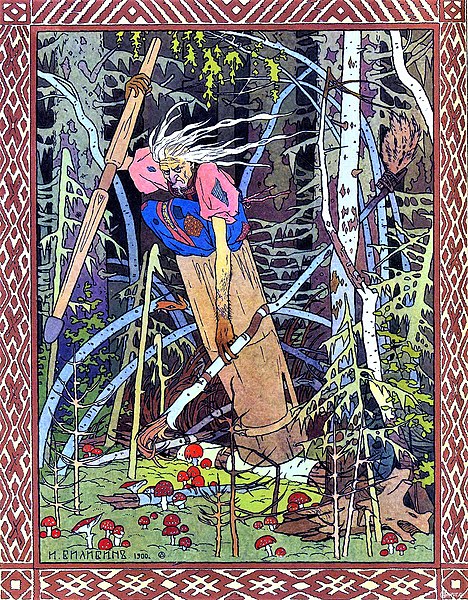
The Crone: An Alternative to the Hag

Image
Originally in response to the question: In D&D is there a creature that is the good or neutral equivalent to a hag? I don’t know of any such creatures canonically in 5th edition which are good or neutral versions of the hag. Swanmays The closest equivalent I can think of from previous editions are Swanmay. The Swanmay are a secretive sisterhood of shapechangers (swan specific) with ranger-like abilities. I knew of them originally from the AD&D 2nd Edition Monstrous Manual , but they also show up as a playable race in the Complete Book of Humanoids . Swanmays are not exactly the same concept as hags, but kind of have a  magic women of the wilderness  type thing going on. I strongly suspect that Gygax (or some other creative person working in the D&D sphere) got the idea for Swanmays for them from Poul Anderson's novel Three Hearts and Three Lions , where one of the primary characters is a Swanmay.

Background and Evidence in Dungeons and Locales

Image
Anne (of  DIY & dragons  and  Bones of Contention ) has recently been running a weird post-human setting for for us using  Mausritter . Today she was reflecting how she realized the recent dungeon delve we were involved in lacked any real ability to socially interact with the occupants or phenomena it contains. But, while this might limit things in some ways, I don't think that's necessarily bad.  There can be a variety of different, valid ways to set up a scenario, and not all of them necessarily have to involve social interaction. Leaving aside for now specific physical challenges and dangers, or interactions with more recent denizens of an area; I like having locations set up based on an event or events that happened there in the past, with the nature of things in the area dictated largely by the consequences of those events.  There are several ways I think revelations about past events can play out, either in any given sub-location (room), or in the...

HexDrive Game Jam - The Astral Navigator's Handbook

Image
The Astral Navigator's Handbook is my completed entry for the HexDrive Zine Jam . The HexDrive Zine is something being put together by Micah Anderson & Anxiety Wizard. As they  described it : [HexDrive is] about the greatness of spelljammer, and how none of us have read spelljammer ... do not read spelljammer! (if you have, forget everything!) I'd never gotten involved with these kinds of game jams in the past, but this concept meshed perfectly with some ideas I'd been thinking about for years now, so it seemed like the prefect excuse to get things down in print.  Possibly this is the fastest I've ever written a game supplement from scratch, managing to crank the thing out in two about weeks start to finish. The Astral Navigator's Handbook is a largely systemless CC-BY licensed supplement intended for use with your preferred fantasy role-playing game.  But unlike Spelljammer, it could be shoehorned into a game of slightly more sci-fi style space opera...

The Hedge Lich

Image
Originally written in response to: Can a PC be a Lich in D&D 5E? An actual lich would be pretty powerful for a typical player character to be at lower levels. So, probably successfully becoming a lich would make one an NPC in most games.  Instead I suggest a compromise for those wanting to play a walking skeleton: The Hedge Lich Sometimes wizards try to become a lich when they just aren't well studied enough to pull off the appropriate ritual. Other times a mage creates a ritual attempting to resurrect someone, a gift which only divine power can truly provide. Often the result is simply failure, but occasionally the caster creates a lesser form of free willed undead sometimes referred to as a "Hedge Lich". The flesh of a hedge lich gradually rots away leaving only an animated skeleton. A hedge lich has the same ability scores they had in life as well as any classes, skills or proficiencies. However, they lose any racial abilities except those which are inna...

Necromancy: The Hallowed Science

Someone on Quora asked: How would you make a goodly aligned necromancer in Dungeons and Dragons? This garnered responses from a lot of folks . Options that came to my mind included: The Good Doctor - A humanist medical researcher who feels that it is not ideal to trust gods and magical patrons for healing and support, since they may have motives not aligned with those of individual mortals. Only a reasoned approach to magic can be trusted. Unfortunately academic understanding of magical healing and revivification is still in its infancy, but research continues! A Gray Gift - A necromantic prodigy. You didn't ask for this talent, but you can just perfectly envision how the entropic and animating forces intertwine within flesh. Sometimes you wonder how something so easy is so difficult for most folks to understand. Others view your abilities as ghoulish and unpleasant. But the gods can't have given you this understanding in vain, surely there must 11be some way you ...

Doing Lines of Dust

In response to the post: Can you selectively dust of disappearance just an individual? Could you ingest it or slip it into a drink for the invisibility effect? DCs given assume D&D 5th Edition DC. - --- - If the rules don't specifically allow it, I'm guessing that by default it probably isn't intended to work if used in ways other than described. Otherwise it would probably be an ointment or potion. But if players get creative why not allow something to work with side effects and caveats? When snorting or ingesting Dust of Disappearance, roll 1d12 or choose: You snort a line of dust of disappearance. Works. Perfect! But now, each round, make a Constitution save, DC 15. On a failed roll you sneeze, coating the opponent in dust and making them invisible. Lasts the usual dust duration. You're blind! A friend reads the small print: Not meant to be taken internally. May cause retinal transparency lasting up to 16 minutes. You itch like crazy. Allergic re...

Four Wendigos for D&D

Someone on Quora had asked  How would you stat a wendigo in D&D 5e? And I kept thinking there were already stats for a Wendigo, or something like it. But digging through, the Dungeons & Dragons 5th Edition official sources, I couldn't readily find them. So, with minimal research and a little brainstorming, came up the ideas below. Wikipedia  says of wendigos: The wendigo is described as a monster with some characteristics of a human or as a spirit who has possessed a human being and made them become monstrous. Its influence is said to invoke acts of murder, insatiable greed, cannibalism and the cultural taboos against such behaviors. ... Basil H. Johnston, an Ojibwe teacher and scholar from Ontario, gives a description of a wendigo: The Wendigo was gaunt to the point of emaciation, its desiccated skin pulled tightly over its bones. With its bones pushing out against its skin, its complexion the ash-gray of death, and its eyes pushed back deep into their sockets,...
Languages: Monastic Linguistics & Unusual Tongues

Another post regarding languages, this one came about as a brainstorm in response to a Quora question: In D&D 5E, what (possibly exotic) languages could a monk have picked up in a monastery? Depending on the monastery, I think a case could be made for literally any language.  Examples below could probably apply to other other religious, arcane or academic institutions of the right sort as well: All normal languages - Might be common if the institution focuses on learning in general. Axiomatic and/or Gith  - Axiomatic was proposed as a descriptor of lawful plane traits in D&D 3rd Edition. A language of this sort might be common in monasteries run by by the Githzerai, or those founded on Githzerai teachings. Possibly also useful for legal training. Anarchic  - Similarly Anarchic was proposed to describe chaotic qualities.  This might be used by sort of "anti-monks", chaos-warriors, or covenant of  sorcerers of unmaking . Basically any gr...

Why Dragons Actually Hoard Treasure

Image
Another response to a  Quora question . Choose one or roll 1d20: 1) Dragons are the bower birds of the monster world. They need to make their lairs as shiny and full of cool stuff as possible to attract a mate. 2) The riddle: In marble walls as white as milk, Lined with a skin as soft as silk; Within a fountain crystal clear, A golden apple doth appear. No doors there are to this stronghold, Yet thieves break in and steal the gold. Actually alludes to dragon eggs, the embryos of which require gold during certain developmental stages. 3) There was once a more common form of vegetation called Glintweed, whose leaves had an iridescent sheen when viewed in direct sunlight. For various reasons this plant functioned as ideal nesting material for dragons. Unfortunately, as humanoids began to mine large quantities of precious metal ores, dragons started running into a variant of the dragonfly / oil problem : To the instinctual side of a dragon’s brain, lustrous highe...

Mommy, why am I a Tiefling?

A Quora user asked the question: In DND, can a Tiefling be born from two human parents? My answer to any question along these lines is almost always going to be: Yes! (setting norms permitting) To find out why mummy and daddy are human and you're not, pick or roll 1d20: Thauma-genetic manipulation at the fertility clinic. Surrogate birth. Cuckoo demon left an extra bun in their oven while no one was looking. Your twin sibling looks perfectly human though. Parents made a pact with the Infernal powers, dedicating their next child to the Grand & Decadent Cause. (ANGSTY TEEN TIEFLING: Jeez! Lay off mom and dad! I don't wanna do your stupid dark destiny plans!) One of your parents used to be an infernal pact warlock before you were born. They turned from that path a long time ago, repented, and tried to make amends for the things they did during those times. But a part of the pact they'd overlooked ensured their first born would be a Tiefling. So here you are...

Scraps from a Dwarven Cookbook

I've come to realize that most of the RPG related ideas I come up with end up shuffled away to some forgotten corner of Quora, never to be seen again.  So, to collect them all in one place for easier reference, a few of those I liked better are getting transferred here. If you found an ancient Dwarven cookbook in a long forgotten ruins in Dungeons and Dragons, what recipes might you find? Recipes and cooking advice found in dwarven cookbooks tends to fall into one or more of the following categories: References to rare monsters (ones not listed in the MM, or listed by an untranslated dwarven name), but only described in detail as to how to gut and cook them. Might mention poison glands or horns or such, but not always directly helpful in identifying how to combat the thing. References to some highly prized ingredient (like Silphium) which was key for so many things, ultra healthy and made everything better, but which can no longer be identified. May not exist anymore or i...

Paragons & Pantheons

Disclaimer: Any views indicated here are from my own amateurish lay study of the subjects. Please consult an appropriate theologian or appropriate lore source for more accurate information on real-world religious and cultural beliefs and practices. On Twitter Kiel Chenier asked : One thing I struggle to do in #dnd5e is use gods effectively. Gods and pantheons never really interested me. Chalk it up to growing up around abusive zealots. As a consequence I often use fantasy religion as an evil force in my rpg writing, which feels limiting now. How fix? In response Erik Jensesn suggested : Hang out with some people of faith (who you get along with) who don't have those same scars and chat about how their religious practice intersects their daily living. As someone "of faith" who has been largely insulated throughout my early life from abusive zealots, this is something I've struggled with myself over the years, at least in the way that D&D clearic-type-ma...

What does the "old school renaissance" (OSR) in role-playing mean to you?

Back in December, Mike Evans asked : "Many people have different opinions on this... so: what does the OSR mean to you? What characteristics define it?" I responded at the time in the thread he started, but wanted to repost my thoughts again here for future reference: The Old School Renaissance (OSR) in role-playing games seems to mean different things to different people, and I've seen some frustration, especially outside the OSR community with trying to pin down a definition.  Or disdain due to the idea that OSR is simply shorthand for nostalgia-driven, regurgitated pap. But the ambiguity doesn't really bother me at all.  When I see OSR I know what I'm getting, and nostalgia is only a piece of the formula. In my mind OSR is associated with any combination of the following: Compatibility (either 1-to-1 or in spirit) with older types of games. An effort to figure out the mindset which went in to earlier games, approached with both a critical...

A haphazard assemblage of my D&D likes and dislikes throughout editions.

This is inspired by, if not probably the most direct response to, Catty Big's inquiry regarding a 5th edition review.  It's also heavily rambling, so hold on to your hats. My tastes in D&D and it's ilk are pretty eclectic.  As with music I rarely like all of one thing, but tend to find certain things I really like in most products.  Below are general impressions of several editions and related products.  Keep in mind these are all subjective feelings and not deep analyses.  Your mileage may vary. Caveat:  Sometimes I like to build for lots of damage or one thing or another. But usually I'm not too fussy about balance, as long as I feel my character's abilities haves something interesting to contribute both inside and outside of combat. Swords & Wizardry (0th edition retroclone) Advantages:  Small and pretty straightforward.  Pared down and easy to tinker with. Disadvantages:  Some bits still feel a bit cobbled together an...

The Stele of Yig

Apparently St. Patrick was involved in the writing of Swords & Wizardry, since there seems to be a paucity of snakes in the product.  As Andy Vann pointed out this is sort of a problem when casting the Sticks to Snakes spell. As a remedy to this oversight, please examine the inscriptions on the Stele of Yig .

Sword +1!

Why do so many +1 magical swords exist: Roll 1d8: They were much more powerful swords, but the enchantments have worn thin over the centuries. Many swords become enchanted through use or user.  A warrior of minor renown will eventually find her sword acquires +1 effectiveness.  A sword that has seen a hundred battles in a dozen hands might also become +1.  Greater bloodshed or a more legendary wielder can contribute higher bonuses. In the Elder Wars, 5000 years ago mage-smiths were stamping these things out like hot-cakes for the rank and file.  Things were different back then and the rapid sword-enchanting rituals of that age are now lost. Mages can temporarily enchant a weapon at +1, but every now and then the enchantment sticks and the sword stays +1 indefinitely. It's just the result of certain alchemical minerals infused in the coal or iron from which the sword was made. Weapons from the planes beyond, are often a physical extension of the creatures wh...

Gimlet-Eyed Worm

No. Enc.: 1d2 Alignment: Neutral Movement: 60' (20') Armor Class: 5 Hit Dice: 6 Attacks: 1 (puncture) Damage: 2d6 Save: F6 Morale: 4 Hoard Class: (special) XP: 820 These large, 30' long worms adhere to the ceiling, and have natural camoflage to blend in to rock surfaces.  Their "head" consists of a large (500gp) diamond where a mouth would normally be, surrounded by a ring of a dozen or so piercingly intelligent eyes.  They will normally not be seen unless someone intentionally looks at the ceiling. Their presence in dungeon environments, derives from the extreme boredom of their natural place in life (rending rock to make food with their oversized diamond).  They are there for the entertainment.  Watching.  Just watching, with a wry and piercing gaze. Although they have no natural mode of speach, any method devised to speak with them reveals rapier-like wit and caustic sense of humor.  Although a gimlet-eyed worm will be perfectly happy to...

Brains!

Reading the Blood Sorcerers of Paja , in a roundabout way this mention of using human flesh for magic, got my mind meandering back to an old line of text: "Connall took out the brains of the dead king and mixed them with lime to make a sling-stone - such "brain balls," as they were called being accounted the most deadly of missiles.  This ball was laid up in the king's treasure-house..."  - Celtic Myths and Legends , T. W. Rolleston I've been cludging away at some ritual rules for awhile:  something like spells, but taking more time, consuming more components, etc. but with the advantage of being usable by anyone, and not consuming daily spell reserves.  Anyhoo... Rituals consume components, and specific components can be tricky to obtain.  Stealing the shadow, cast by moonlight, from the third-left-leg of a man-sized spider, can be an annoyingly specific proposition.  Do such things even exist?  And who knows how tough it is to find so...

Five Worldly Ascetics & Rogue Exponents

I've always liked psionics in my D&D, both as an innate set of traits, and as a trained or ascetic practice.  But one of Telecanter's blog posts, which helped highlight these differences got me thinking about how odd it is that a character whose claim to fame is self reliance, would be marauding through a dungeon looking for wealth and power. I posed this question in the comments, and in  Telecanter's response , he mentioned a similarity between kung fu narratives and westerns.  This led to a roundabout epiphany on my part. In my mind westerns will now always be associated with this weird little niche of geekdom: The Dark Tower - With it's knightly gunslighters. Knights of Cydonia - Which crosses the kung fu and western genres. 21 Guns - Which crosses the Dark Tower with Knights of Cydonia. The Dark Tower in particular suggests a foil to the gunslinger:  the failed gunslinger. Gunslingers who fail their Test are forced to turn in their g...